
Revolutionizing Workforce Preparation The Comprehensive Range of Virtual Reality Applications in Energy Sector Training
The oil and gas industry has embraced virtual reality as a transformative training tool that addresses the sector's unique challenges across operational domains. From high-risk emergency scenarios to precision equipment handling, VR programs provide immersive learning experiences that traditional methods cannot match. These solutions combine realistic simulations with measurable performance tracking, creating safer, more competent workforces while delivering significant operational and financial benefits. As the technology continues to evolve, its applications expand to cover nearly every aspect of energy sector training requirements.
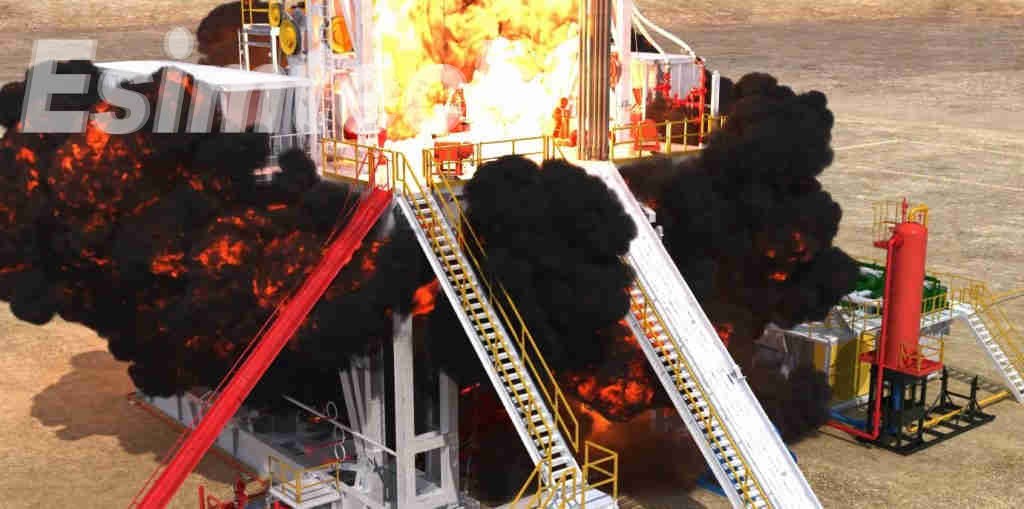
Virtual reality has revolutionized safety training in the oil and gas industry by creating risk-free environments for practicing high-consequence scenarios. Emergency response modules simulate everything from offshore platform evacuations to refinery fire containment with unprecedented realism. These programs go beyond visual immersion, incorporating haptic feedback to recreate the physical sensations of equipment operation during emergencies and spatial audio that mimics the chaotic soundscape of real incidents. Advanced solutions like those from Oil and Gas Simulation Software providers track every decision and movement during these simulations, generating detailed performance analytics that help identify individual and team training needs.
Hazard recognition training represents another critical VR application that has demonstrated measurable improvements in workplace safety. These programs immerse workers in virtual environments where they must identify potential risks ranging from equipment malfunctions to chemical exposure threats. The interactive nature of VR allows for immediate feedback when hazards are missed or improperly assessed, reinforcing learning more effectively than traditional classroom instruction. Studies show employees trained through immersive hazard recognition programs identify real-world risks 40-60% faster than those trained through conventional methods.
Process safety training benefits particularly from VR's ability to simulate chain-reaction incidents that would be impossible or prohibitively expensive to recreate physically. Workers can experience the consequences of procedural deviations or equipment failures in scenarios that accurately model fluid dynamics, pressure changes, and thermal effects. Companies leveraging Esimtech solutions report significant reductions in process safety incidents after implementing these immersive training programs, with some facilities achieving 50% fewer safety violations within the first year of adoption.
| Safety Training Type | Key VR Features | Performance Improvement |
|---|---|---|
| Emergency Evacuation | Full environmental immersion, team coordination scenarios | 35-50% faster evacuation times |
| Fire Response | Thermal feedback, extinguisher simulation | 60% improvement in proper technique |
| Gas Detection | Olfactory simulation, meter reading practice | 45% faster leak identification |
| Confined Space Rescue | Equipment handling, communication challenges | 50% reduction in procedural errors |
The precision required for operating complex oil and gas equipment makes VR an ideal training platform, allowing unlimited practice without risking damage to actual assets. Drilling simulators recreate everything from routine pipe handling to blowout scenarios with exacting detail, while refinery operation modules train control room personnel on startup sequences, shutdown procedures, and abnormal situation management. These technical training programs often incorporate Oil and Gas Simulation Software that connects to real control systems, creating seamless transitions between virtual training and actual operations.
Maintenance training has undergone a revolution through VR technology, particularly for complex equipment that requires disassembly for proper servicing. Technicians can practice complete overhaul procedures on virtual models of turbines, compressors, and other critical assets before ever touching physical equipment. This approach reduces first-time maintenance errors by up to 70% according to industry studies, while simultaneously decreasing the time required for hands-on training by allowing workers to master procedures in VR first. The ability to pause, rewind, and replay specific steps accelerates learning curves significantly.
Specialized equipment operation training benefits enormously from VR's ability to simulate rare but critical scenarios. Crane operators can practice lifts in virtual storm conditions, drill crews can experience kick detection and well control procedures, and pipeline technicians can rehearse emergency shutdown protocols—all without the risks and costs associated with live training. Providers like Esimtech create equipment-specific modules that replicate the exact controls and behaviors of real machinery, ensuring skills transfer directly to the job site.
Virtual reality has transformed compliance training from a checkbox exercise into an engaging, impactful experience. Rather than passively watching videos or reading manuals, employees actively demonstrate their understanding of regulations through simulated scenarios that test their knowledge in realistic contexts. VR programs can recreate exact regulatory inspection conditions, allowing workers to practice proper documentation, equipment checks, and safety protocol demonstrations. This active learning approach results in significantly better retention and application of compliance knowledge compared to traditional methods.
Leadership development represents an emerging frontier for VR training in the energy sector. Supervisors and managers can practice crisis decision-making in simulated emergencies that accurately replicate the stress and complexity of real incidents. These programs track leadership behaviors under pressure, providing valuable feedback on communication effectiveness, resource allocation, and team coordination. The ability to experience the consequences of decisions in a risk-free environment helps develop judgment and situational awareness that traditional leadership training methods struggle to impart.
Cross-functional team training leverages VR's capacity to bring together personnel from different disciplines in shared virtual environments. Drilling teams can coordinate with geologists, refinery operators can collaborate with maintenance crews, and safety personnel can practice emergency response with all relevant stakeholders—all within controlled simulations that would be logistically impossible or prohibitively expensive to arrange physically. This type of integrated training improves communication, clarifies roles, and enhances overall operational readiness across organizational silos.