How Online OCR File Converter Works?
Online OCR has transformed the way we handle printed and scanned documents in the digital age. Whether you are a student, business professional, or researcher, Online OCR helps convert images, scanned PDFs, and printed text into editable digital files. This powerful technology saves time, reduces manual typing, and increases productivity.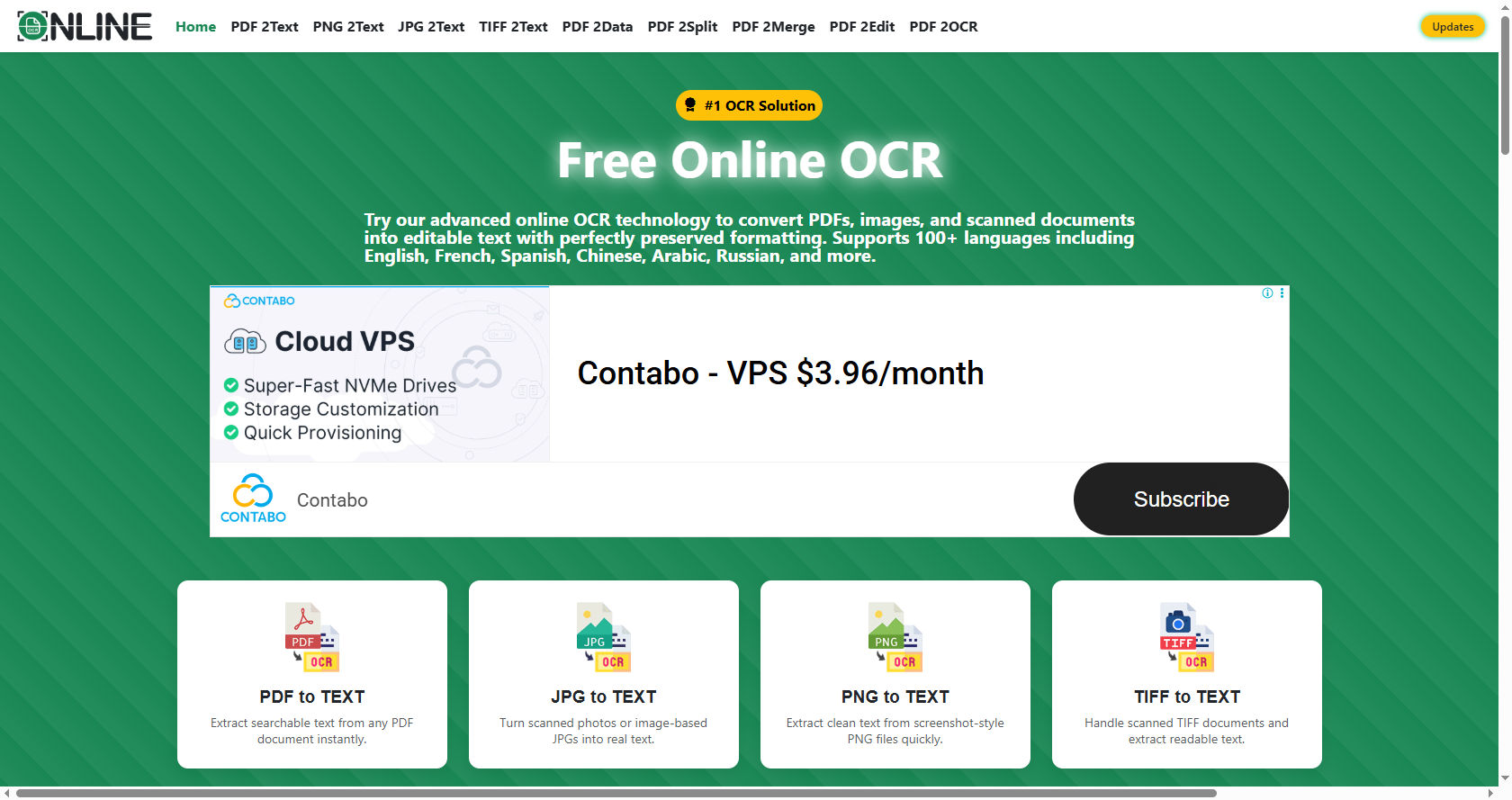
Online OCR stands for Optical Character Recognition, and when offered through web platforms, it becomes even more accessible.
With Online OCR, users do not need to install heavy software. Instead, they simply upload a file to a website and receive editable text within seconds.
In this comprehensive guide, we will explore how Online OCR works, the technology behind it, its benefits, limitations, applications, and future trends.
By the end, you will clearly understand how Online OCR processes documents and why it is such an important digital tool today.
What Is Online OCR?
Online OCR is a web-based service that converts text from images or scanned documents into machine-readable and editable text. Instead of typing everything manually, users can upload a scanned page, a photo of a document, or even a screenshot, and Online OCR extracts the text automatically.
Traditional documents are often stored as images in formats like JPG, PNG, or PDF. While humans can read these images easily, computers cannot understand the text inside them unless Online OCR technology processes the file.
Online OCR bridges this gap between image-based content and editable digital text. It allows you to convert printed contracts, textbooks, invoices, handwritten notes, and more into Word documents, Excel sheets, or plain text files.
The Basic Concept Behind Online OCR
At its core, Online OCR works by analyzing the shapes of characters in an image. Every letter and number has a unique pattern. Online OCR identifies these patterns and matches them to known characters stored in its database.
The system scans the uploaded file pixel by pixel. Then, it detects areas that contain text. After identifying text regions, Online OCR recognizes individual characters and converts them into digital text.
This process may sound simple, but Online OCR uses complex algorithms, pattern recognition, and sometimes artificial intelligence to achieve high accuracy.
Step-by-Step Process of How Online OCR Works
Image Upload and Input Processing
The first step in Online OCR is uploading the document. Users upload an image or PDF file to the Online OCR platform. The system checks the file format, size, and quality.
Once uploaded, Online OCR prepares the image for processing. This preparation stage is crucial because clear input leads to better results.
Image Preprocessing
Before recognizing text, Online OCR improves the image quality. This stage is called preprocessing.
Online OCR may:
-
Adjust brightness and contrast
-
Remove noise or background marks
-
Correct tilted or skewed images
-
Convert colored images into black and white
These improvements help Online OCR detect characters more accurately.
Text Detection
After preprocessing, Online OCR identifies which parts of the image contain text. Not all parts of an image are useful. Some areas may contain pictures, borders, or decorations.
Online OCR separates text regions from non-text elements. It draws invisible boundaries around paragraphs, lines, and words.
Character Segmentation
Next, Online OCR breaks down text into smaller units. It separates lines into words and words into individual characters.
This segmentation step is important because Online OCR must analyze each character separately before recognizing it.
Character Recognition
This is the core stage of Online OCR. The system compares each character image with patterns stored in its database.
Modern Online OCR tools use machine learning and artificial intelligence to improve recognition accuracy. They learn from millions of text samples. This allows Online OCR to recognize different fonts, styles, and sizes.
Post-Processing
After recognizing characters, Online OCR reviews the text. It corrects possible errors using language rules and dictionaries.
For example, if Online OCR detects a word that does not exist in a language dictionary, it may automatically correct it.
Finally, the system generates an editable file such as:
-
Word document (.docx)
-
Text file (.txt)
-
Excel sheet (.xlsx)
-
Searchable PDF
The user can then download the converted file.
Technologies Behind Online OCR
Pattern Recognition
Early Online OCR systems relied mainly on pattern recognition. They matched character shapes with stored templates. This method worked well for simple fonts but struggled with handwriting or unusual styles.
Feature Detection
Modern Online OCR tools analyze features instead of entire shapes. They detect lines, curves, angles, and intersections within each character. This makes Online OCR more flexible and accurate.
Artificial Intelligence and Machine Learning
Today, many Online OCR platforms use artificial intelligence. Machine learning models are trained using thousands of text samples.
AI-powered Online OCR can:
-
Recognize multiple languages
-
Handle different fonts
-
Detect handwriting
-
Improve accuracy over time
Deep learning models, especially neural networks, allow Online OCR to achieve very high precision.
Types of Files Supported by Online OCR
Online OCR platforms support many file types. This flexibility makes Online OCR suitable for different tasks.
Common supported formats include:
-
JPG and JPEG
-
PNG
-
BMP
-
TIFF
-
PDF
Some advanced Online OCR services also support multi-page documents and scanned books.
Advantages of Using Online OCR
Saves Time
Typing long documents manually takes hours. Online OCR reduces this time to seconds.
Students can scan textbook pages and use Online OCR to create editable notes instantly.
Improves Productivity
Businesses handle large amounts of paperwork. Online OCR helps convert invoices, receipts, and contracts into digital formats quickly.
Easy to Use
Online OCR requires no installation. Users only need an internet connection and a web browser.
Cost-Effective
Many Online OCR platforms offer free services for basic use. This makes Online OCR accessible to students and small businesses.
Multi-Language Support
Modern Online OCR tools support multiple languages. This makes Online OCR useful worldwide.
Limitations of Online OCR
Despite its benefits, Online OCR has some limitations.
Accuracy Depends on Image Quality
If the image is blurry or poorly scanned, Online OCR may produce errors.
Handwriting Challenges
Although advanced Online OCR systems can read handwriting, accuracy may decrease for unclear writing.
Formatting Issues
Sometimes Online OCR may not perfectly preserve the original layout, especially in complex documents with tables and images.
Internet Requirement
Because Online OCR is web-based, it requires an internet connection. Offline software may be necessary in areas with limited connectivity.
Real-World Applications of Online OCR
Education
Students use Online OCR to digitize printed notes, assignments, and research materials.
Teachers use Online OCR to convert old printed exams into editable formats.
Business and Finance
Companies rely on Online OCR to process invoices, receipts, and contracts. This reduces manual data entry and minimizes errors.
Banks use Online OCR to read check information and customer documents.
Healthcare
Hospitals use Online OCR to digitize patient records and prescriptions. This improves record management and reduces paperwork.
Legal Sector
Law firms use Online OCR to convert legal documents into searchable files. This makes research faster and more efficient.
Government Services
Government agencies use Online OCR to digitize archives and historical documents.
Security and Privacy in Online OCR
When using Online OCR, data security is important. Many Online OCR platforms use encryption to protect uploaded files.
Secure Online OCR services automatically delete files after processing. Users should always choose trusted Online OCR providers to ensure privacy.
For sensitive documents, it is important to read the privacy policy of the Online OCR platform before uploading files.
How to Improve Accuracy in Online OCR
To get the best results from Online OCR, follow these tips:
-
Use high-resolution scans
-
Ensure good lighting when taking photos
-
Avoid shadows and blur
-
Keep the document straight
-
Choose the correct language setting
These simple steps help Online OCR deliver better results.
Online OCR vs Traditional OCR Software
Traditional OCR software must be installed on a computer. Online OCR works directly in the browser.
Online OCR offers convenience and accessibility. However, offline OCR software may provide advanced customization features.
For most users, Online OCR is sufficient for everyday tasks.
The Role of Cloud Computing in Online OCR
Cloud computing plays a major role in Online OCR services.
When a user uploads a file, Online OCR processes it on powerful remote servers. These servers handle complex calculations quickly.
Cloud-based Online OCR allows users to process large files without slowing down their personal devices.
Online OCR and Artificial Intelligence
AI has significantly improved Online OCR accuracy.
AI-driven Online OCR systems can recognize patterns more effectively. They adapt to different writing styles and document formats.
As artificial intelligence continues to evolve, Online OCR will become even more accurate and intelligent.
Common Errors in Online OCR
Even advanced Online OCR tools can make mistakes.
Common errors include:
-
Confusing similar characters like “O” and “0”
-
Misreading decorative fonts
-
Incorrect spacing
Users should always review the text generated by Online OCR before final use.
Future of Online OCR
The future of Online OCR looks promising.
With improvements in artificial intelligence, Online OCR will achieve near-perfect accuracy.
Mobile integration will make Online OCR even more convenient. Users will capture images on smartphones and instantly convert them into editable documents.
Real-time translation combined with Online OCR may also become more common. This will allow users to scan foreign-language text and receive instant translations.
Choosing the Right Online OCR Tool
When selecting an Online OCR platform, consider:
-
Accuracy rate
-
Language support
-
File size limits
-
Security features
-
Output formats
Reading user reviews can help you choose a reliable Online OCR service.
Practical Example of How Online OCR Works
Imagine you have a printed assignment. You take a clear photo using your phone.
You upload the image to an Online OCR website. The system preprocesses the image, detects text, segments characters, recognizes them, and generates editable text.
Within seconds, Online OCR provides a Word document. You download it and edit the content easily.
This simple process shows how powerful Online OCR technology can be.
Why Online OCR Is Important in the Digital Era
We live in a digital world where information needs to be searchable and editable.
Online OCR helps transform printed knowledge into digital data. It reduces paper usage and supports digital transformation.
From schools to businesses, Online OCR plays a key role in improving efficiency.
Conclusion
Online OCR is a powerful technology that converts printed and image-based text into editable digital formats. By using advanced image processing, pattern recognition, artificial intelligence, and cloud computing, Online OCR makes document conversion fast and accessible.
The step-by-step process of Online OCR includes image preprocessing, text detection, character segmentation, recognition, and post-processing. Each stage ensures accurate text extraction.
Online OCR offers many benefits, including time savings, improved productivity, cost-effectiveness, and multi-language support. While it has some limitations, such as dependence on image quality, continuous advancements in AI are improving Online OCR performance.
Today, Online OCR is widely used in education, business, healthcare, law, and government sectors. It simplifies document management and supports digital transformation.
As technology continues to evolve, Online OCR will become even more accurate, faster, and smarter. It will remain an essential tool in the modern digital world.
Understanding how Online OCR works helps users take full advantage of its capabilities. Whether you are a student digitizing notes or a company processing documents, Online OCR provides an efficient and reliable solution for converting printed text into editable content.